EN

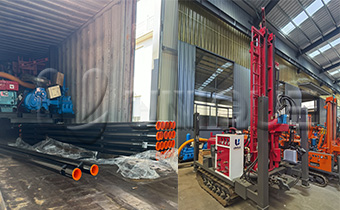
Loading day at the UNIQUEMAC facility follows a familiar rhythm. Forklifts move steadily across the concrete floor, riggers check each lifting sling, and the packing crew works down a checklist that has been refined over years of export shipments. This week the focus was on a UY300 water well drilling rig booked for Mexico. The machine waited on the loading floor with its main frame, mast and rotary head fully assembled, ready to be lifted into the 40HQ container standing open at the dock.
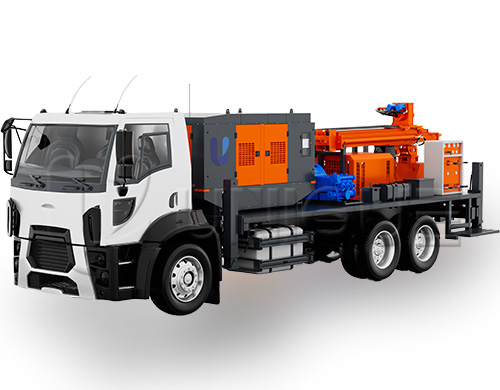
What often surprises first-time buyers is that this order did not leave the workshop as a single drilling machine. It left as a complete package. Alongside the UY300 rig sat a mud pump, an air compressor, a matched set of drill pipes and the accessory items a crew needs to start work at a new site. For the customer in Mexico, that distinction carries real weight. Ordering a rig is one thing. Receiving a working drilling unit and its supporting equipment in one shipment is another.
This article walks through what was loaded, what the UY300 can do, and how the whole package fits together. If you are planning a water well project, the details here should help you decide whether a similar setup matches your needs. Mexico’s drilling season runs on dependable equipment, and a properly configured package arrives ready to work rather than waiting for parts. The same loading routine, the same attention to accessories, and the same single container can be arranged for your order once the project details are confirmed.
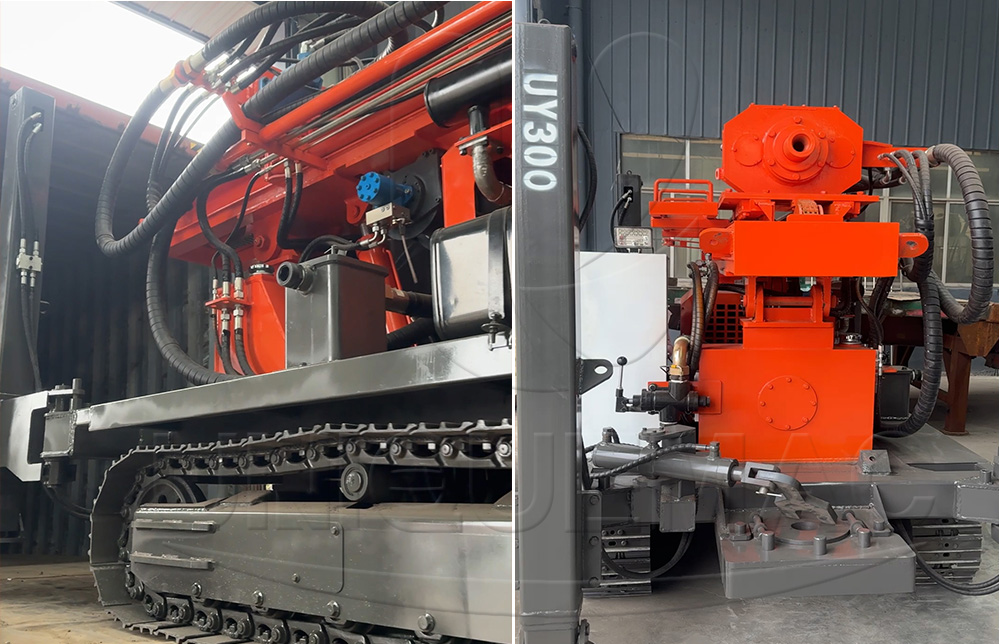
The UY300 is a medium-duty water well drilling rig built for projects in the 300 meter depth range. Its maximum drilling depth reaches 300 meters, which puts it squarely in the segment where most production water wells are actually drilled. It is not an entry-level machine, and it is not an ultra-deep exploration unit. It occupies the practical middle ground between the two, and that is exactly where agricultural, community and livestock water wells tend to live.
The borehole diameter range of 140 to 350 millimeters gives the contractor room to adapt. A 200 millimeter well for a single farm can be drilled with lighter tooling and a smaller mud program. A 300 millimeter production hole for a small irrigation scheme needs heavier drill pipes and a different bit plan. Because the UY300 covers this span, the drilling crew can match hole size to the project instead of forcing every well into a single fixed specification.
That flexibility shows up in the field. For a cattle ranch needing a dependable watering point, the operator can drill a compact well quickly and move to the next location. For a community supply project with higher daily demand, the same rig can step up to a larger bore and more storage capacity. One machine, several well designs, one capital investment.
The main applications include agricultural irrigation, rural water supply, livestock and pasture watering, and other water intake works such as small commercial or industrial supply points. In each case the rig delivers a straight, stable borehole with the reach and diameter the project calls for. The UY300’s mast and control layout also keep setup time reasonable, which matters when a contractor is moving between wells across a wide area. A crew that can rig down, relocate and rig up again in a day keeps a drilling season moving instead of wasting hours on setup between sites.
For buyers comparing models, the 300 meter figure is worth reading as a practical working depth rather than a number to stretch to its limit. A machine rated for 300 meters handles most farm and community wells with comfortable margin, which protects the equipment and keeps maintenance predictable. If your target depth sits close to the rated ceiling on a regular basis, a larger rig gives you more headroom. If your wells run well under 300 meters, the UY300 water well drilling rig offers a balance of power and running cost that smaller machines cannot match.
A note on real-world performance. Penetration rate and the depth you can actually achieve depend on the formation, the drill tools in use and the conditions on site. Soft alluvial ground drills differently from hard rock, and mud circulation requirements change with the strata. The UY300‘s rated capacity is the design ceiling; the result on any given day reflects the ground beneath the drill bit. Keep this in mind when you plan a well, and make sure your tooling package matches the geology you expect to encounter. A realistic estimate of depth and speed comes from matching the machine to the site, not from a specification sheet alone.
Here is where the UY300 order differs from a bare machine sale. When UNIQUEMAC ships a water well drilling rig, the customer receives not just the rig but the supporting equipment needed to run drilling operations from the first day. This is the strongest part of the offering, and it deserves attention. Buying a complete package removes the second procurement round that bare-machine buyers often face, when they discover the rig is on site but the pump and compressor are still months away.
Mud Pump for Mud Drilling
Most water well projects use mud circulation, and the mud pump is the heart of that system. It pushes drilling fluid down the drill string and back up the annulus, carrying cuttings out of the borehole and keeping the hole wall stable as depth increases. In loose or unconsolidated formations, good mud control is the difference between a clean well and a collapsing one. Without steady circulation, fine particles settle around the drill string, the bit loses efficiency, and the crew spends extra hours reaming and cleaning.
The mud pump shipped with the UY300 is sized to match the rig’s drilling range. It maintains the circulation needed to flush cuttings, cool the bit and support the hole until casing and screens go in. For operators working in sandy soil, clay layers or mixed alluvial ground, a properly matched pump keeps the drilling fluid moving at the rate the formation requires. Getting this right up front saves time and trouble later in the well.
Air Compressor for Air Drilling Applications
Some projects are better suited to air drilling, and the UY300 package includes an air compressor to handle those conditions. Air drilling is often the right choice in hard rock, in dry formations where water-based mud is impractical, and in areas where groundwater is scarce and you want to avoid introducing drilling fluid.
The role of the compressor is to deliver a high-volume air stream down the borehole that lifts cuttings out of the hole and keeps the bit face clear. Because compressor output and formation behavior are closely linked, the right configuration depends on the specific project. UNIQUEMAC works with each customer to confirm the compressor specifications that fit the planned drilling conditions before finalizing the package. This keeps the equipment matched to the ground it will actually encounter rather than relying on a standard guess.
Drill Pipes and Essential Accessories
A rig without drill pipe cannot drill, which is why the shipment includes a matched set of drill pipes. The pipe is selected to suit the UY300’s depth range and the borehole diameters the project requires. Having the correct pipe on hand from day one removes a common bottleneck, because replacement or supplementary tooling can otherwise delay a project by weeks while it ships across the ocean.
Essential accessories complete the picture. Tool joints, subs, stabilizers and the small items a crew needs for assembly and maintenance travel with the rig. When the container arrives, the customer can begin setting up the equipment without waiting on additional parts. This is a practical benefit that matters on remote sites where spare parts are not easily sourced, and it is a big reason buyers choose a full package over a bare machine.
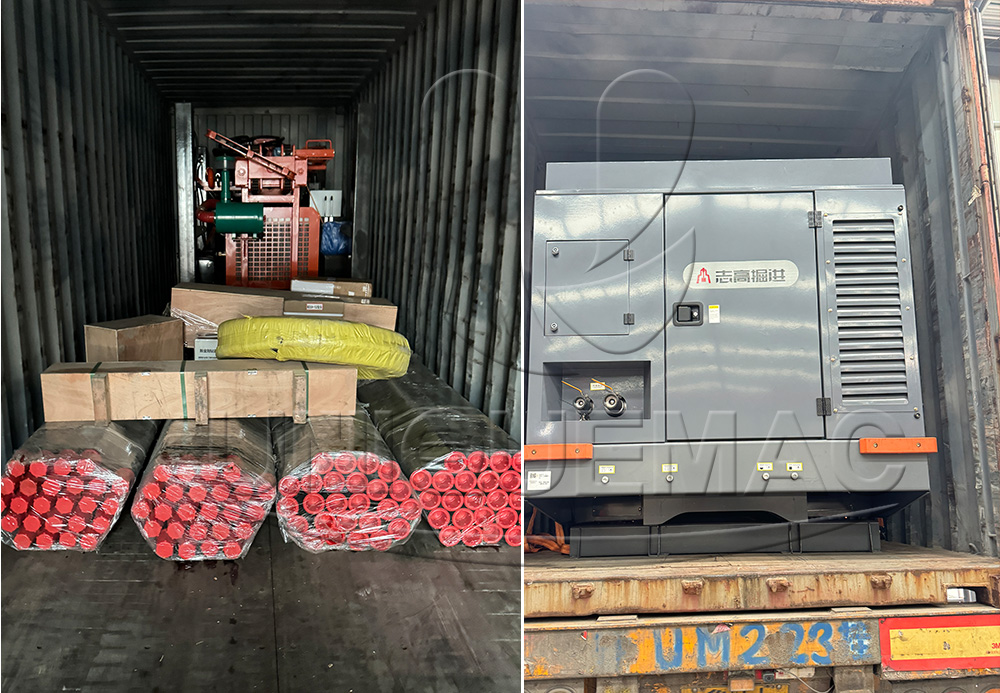
Shipping an entire drilling operation in a single container saves time, reduces cost and simplifies customs clearance. For this Mexico order, the loading team arranged the UY300 rig, the mud pump, the air compressor and the drill pipe sets inside one 40HQ container.
The packing process follows a set plan. The heaviest components are placed first and secured to bear the load, while drill pipes are bundled, wrapped and laid in sections where they will not shift during transit. Smaller accessories are boxed and stowed in the remaining space. Straps, chocks and blocking keep every item in place, and the crew photographs each stage so the customer can see exactly how the load was arranged.
A note for buyers planning similar shipments. The container layout has to respect the dimensions, weight and quantity of the equipment, and it must meet loading and transport safety requirements. Not every rig and accessory combination fits in one 40HQ container, so the plan is confirmed on a per-order basis. UNIQUEMAC calculates the arrangement before packing to ensure a clean, safe and complete load, so the customer knows exactly what arrives on site. That confirmation also gives the buyer a clear list for import documentation and for scheduling the trucks that will move the equipment from the port to the drilling location.
Mexico’s demand for water wells is spread across agriculture, livestock and rural communities, and a 300 meter rig covers a large share of those projects.
Agricultural irrigation is the most common driver. Farms across northern and central Mexico rely on groundwater for crop production, especially in regions where surface water is limited or seasonal. A rig that reaches 300 meters and opens boreholes up to 350 millimeters can develop the production wells these operations depend on. When irrigation demand grows, a properly developed well becomes the backbone of the farm’s water supply.
Rural and remote water supply is another strong fit. Many small communities and isolated settlements draw their water from drilled wells, and a medium-depth rig is well matched to developing those sources. The ability to move the rig and set up at a new site quickly makes it practical for serving several villages in a single working season.
Livestock and pasture operations also need dependable water. Cattle ranches and grazing operations in arid and semi-arid zones depend on wells for stock watering, and the UY300’s depth range suits those installations. A reliable well keeps a herd healthy and reduces the labor of hauling water over long distances. In dry months, a well that keeps producing becomes the difference between steady operation and a rushed, costly water hauling schedule.
The right configuration always comes down to local conditions. Geology, target depth, borehole diameter and the chosen drilling method determine the final equipment list. A buyer in a hard rock area may lean toward air drilling, while one in alluvial soil will run mud. UNIQUEMAC evaluates these factors before recommending a package, rather than applying a one-size-fits-all setup. The same model rig can be delivered with different tooling to suit different regions. What works beside the coast may not suit the highlands, and the equipment list should follow the ground rather than a catalog.
If you are comparing rigs for a water well project, the UY300 is one option, but the right choice depends on your specific situation. Working through a few questions will narrow the field and help you describe your needs clearly to any supplier.
What drilling depth does your project require? If your wells sit below 300 meters, you need a larger rig. If they stay well under that figure, a medium rig may be more economical to buy and run. Depth is the first constraint, and it shapes every other decision.
What borehole diameter do you need? Production wells for irrigation and community supply often call for larger diameters, while smaller livestock wells can be drilled more economically. The diameter drives the drill string and bit selection, so it belongs in your initial inquiry.
What kind of formation will you drill through? Hard rock, alluvial soil and mixed ground each favor different drilling methods and tooling. Knowing your geology guides the choice between mud drilling, air drilling and other techniques. If you are unsure of the formation, mention what you know and ask the supplier to advise.
Do you need supporting equipment? A complete package with a mud pump, air compressor and drill pipes saves procurement time and ensures the components are matched to the rig. If you already own supporting equipment, you may only need the rig itself. Be clear about what you have so the quotation reflects reality.
What are your transport and site conditions? Consider how the equipment will reach your site, what space you have for setup, and what the local operating conditions look like. A rig that fits your project on paper still needs to reach the location and run there. Road access, crane availability and the distance from the port all shape the practical plan, so they belong in the conversation as early as possible.
Answering these questions gives your supplier the information needed to quote a realistic package. A rig is only as useful as the tooling and support behind it, so clarity on these points prevents mismatches later and speeds up the whole process. Even a short list of the facts you already know, sent at the start, lets a supplier respond with a much more accurate recommendation than a blank request for a quote.
UNIQUEMAC manufactures water well drilling rigs and builds export packages for customers in Mexico and many other markets. Every order is configured around the buyer’s project rather than forced into a standard template, which is what allows one model to serve so many different sites.
When you reach out, tell us your required drilling depth, hole diameter, geological conditions and project location. With that information, UNIQUEMAC can help you evaluate a suitable water well drilling rig and accessory package for your project, and confirm how the equipment would be arranged, packed and shipped. A detailed inquiry lets the team work from facts instead of assumptions, which shortens the quotation cycle and keeps the recommendation aligned with what you will actually drill.
Whether you are drilling for agriculture, rural water supply or livestock, a matched drilling package saves time and reduces the risk of delays once your rig arrives on site. Send your project details and let the UNIQUEMAC team put together a solution built around your ground conditions and your budget. From the first specification discussion to the day the container opens at your site, the goal is the same: a drilling unit that goes to work with the right tools behind it.