EN

A water well drilling rig power head is designed to rotate the drill string and drive the drilling bit. However, during mud drilling operations, some drilling rigs may experience water or mud leakage around the power head.
One common cause is wear or damage to the rotary seals used in the high-pressure drilling fluid passage. When these seals lose their ability to maintain pressure, drilling fluid can escape from the rotating connection.
So, why does a water well drilling rig power head leak water? And how can a different water passage design help reduce this problem?
In this article, we explain the common causes of power head leakage and introduce how UNIQUEMAC uses a lower-mounted high-pressure water swivel to separate the drilling fluid passage from the main power head structure.
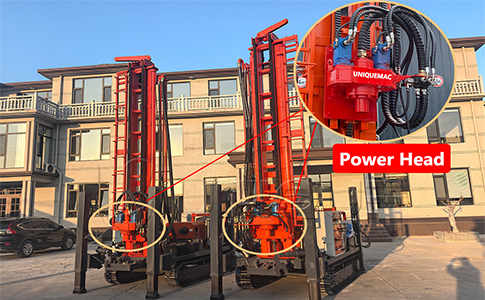
The power head is the part of a water well drilling rig that actually rotates the drill pipe. Its main job is to turn the drill string so the bit can cut through rock and soil. The power head sits above the drill pipe and transmits rotation torque from the rig’s power source down through the drill string.
The power head provides the rotational torque needed to turn the bit. It is driven by a hydraulic motor or a mechanical drive system, depending on the rig design. The power head grips the top of the drill pipe and rotates it continuously while the bit works at the bottom of the hole.
At the same time, the mud pump is doing a completely different job. It pushes drilling fluid down through the inside of the drill pipe. This fluid travels through the center of the drill string, exits through the bit, and carries the cuttings back up the annulus between the drill pipe and the borehole wall.
This is the key concept to understand. The power head is responsible for driving rotation. The mud circulation system is responsible for delivering drilling fluid. These are two separate functions, and they do not have to share the same physical path. Different rigs connect them in different ways, and the way they are connected determines how much stress the rotating seal has to handle.
When the fluid must pass through the rotating structure of the power head itself, the seal that connects the static fluid line to the rotating drill pipe becomes a critical wear part. When the fluid path is separated from the main transmission structure, that rotating seal is moved to a different component and the power head faces far less fluid pressure.
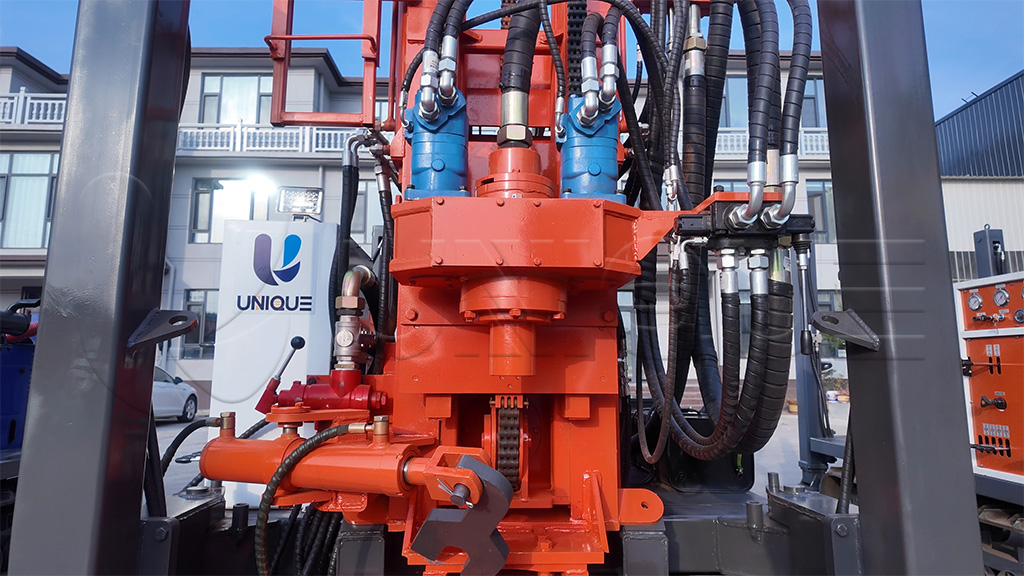
This is the most important question for anyone who has dealt with a leaking power head on the job. Understanding the causes helps you choose a rig that avoids the problem in the first place.
Worn or Damaged Water Seals
The most common reason a power head leaks is simple wear on the water seal. When high-pressure mud passes through a rotating seal structure, the seal has to hold back fluid while one side of it is spinning. That is a demanding job.
Over time, several things happen. The sealing ring wears down from constant rotation. The water seal ages and loses its flexibility. The sealing face can become scratched or pitted. When the seal loses its elasticity, it can no longer press tightly enough against the rotating surface, and fluid starts to escape.
Water seals are wear items by nature. No seal lasts forever when it is rotating under pressure in contact with drilling fluid. The real question is how much load your rig’s design puts on that seal and how easy it is to replace when it wears out.
High-Pressure Drilling Fluid
The mud pump does not deliver a gentle trickle. It pushes drilling fluid at high pressure to overcome the resistance of the drill pipe and the borehole, and that pressure is applied directly to the sealing structure.
If the seal is not sized for the working pressure, if it is installed incorrectly, or if it has already started to wear, the pressure forces fluid past the seal. High-pressure fluid finds the smallest weakness and quickly turns it into a leak. The higher the pressure your drilling conditions require, the more the seal has to endure.
Abrasive Particles in Drilling Mud
Drilling mud is not clean water. It contains sand, rock fines and other solid particles that are picked up as the bit grinds through the formation. When this abrasive fluid passes through a rotating seal, those particles act like sandpaper on the sealing face and the rotating contact surface.
Each rotation grinds a little more material off the seal. Particles that get wedged between the sealing surfaces accelerate the wear dramatically. This is one reason a rig that works in sandy or loose formations tends to wear out seals faster than one working in stable clay.
Continuous Rotation and Friction
A water well drilling rig does not run for a few minutes and stop. It rotates the drill string for hours at a time, day after day. Continuous rotation creates friction at the sealing contact, and friction creates heat.
Heat degrades seal materials. Combined with the rotating speed, the friction, the temperature rise and the lubrication condition, it steadily shortens the service life of the rotating seal. If the seal runs dry or the rig runs at high speed for long periods, wear accelerates further.
Rotating seal structures operating in high-pressure environments with solid-laden drilling fluid face predictable wear and require regular inspection and replacement. The design of the rig determines how exposed that seal is and how often it needs attention.
It is worth noting that not all power head leaks have the same cause. Depending on the drilling rig design, leakage may also occur at pipe connections, fittings, hoses, or other sealing points. Identifying the exact leakage location is important before deciding which component needs repair.
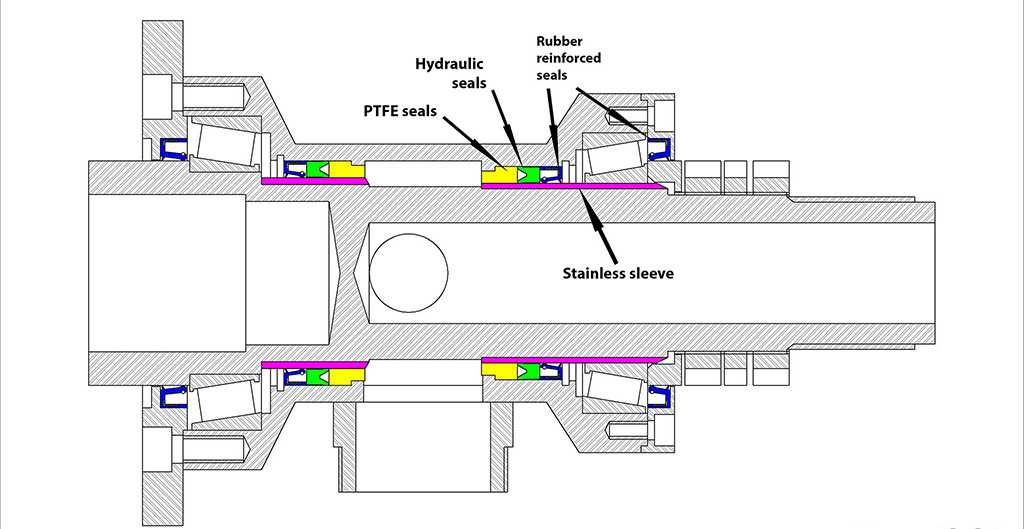
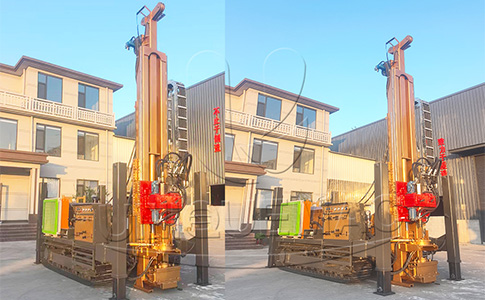
UNIQUEMAC takes a different approach to the fluid path. Instead of routing the drilling fluid through the power head’s main rotating structure, UNIQUEMAC water well drilling rigs use a lower-mounted high-pressure water swivel. This is the design that separates the mud path from the power head’s main transmission structure and reduces the risk of power head leakage.
A Lower-Mounted High-Pressure Water Swivel
In the UNIQUEMAC design, the high-pressure water swivel is mounted below the power head. The mud pump delivers water or drilling mud through this independent high-pressure water swivel directly into the drill pipe. The fluid does not pass through the power head’s main drive structure.
A water swivel is a component that transfers drilling fluid from a stationary supply line into the rotating drill pipe. It uses its own rotating seal to control leakage at that connection. By placing this swivel in a lower position and keeping it separate from the power head, UNIQUEMAC moves the high-pressure sealing job away from the main transmission components.
Separating the Drilling Fluid Path from the Main Power Head Structure
The key difference is where the drilling fluid travels. Think of it as two different structural schemes.
In a typical arrangement where mud flows through the power head, the fluid enters the rotating channel inside the power head. The rotating seals inside the power head then carry the full mud pressure. When those seals wear, the leak appears right around the power head, and the drilling fluid can affect the power head’s main components.
In the UNIQUEMAC arrangement, the mud goes through the lower-mounted high-pressure water swivel. The fluid path is separated from the power head’s main drive structure. The rotating seal that handles the pressure sits in the water swivel, not in the power head. This reduces the chance that drilling fluid enters the power head’s main transmission structure.
To be clear, this comparison is about different structural schemes. It does not claim that every other manufacturer uses the same internal water path design. Different rigs use different layouts, and the point is simply that UNIQUEMAC deliberately keeps the drilling fluid away from the power head’s main transmission structure.
Reduced Leakage Risk and Easier Maintenance
From the customer’s point of view, this design offers clear practical value. Because the power head is no longer carrying high-pressure drilling fluid through its main rotating structure, the risk of leakage caused by a failed internal water seal inside the power head is reduced. There is less chance that mud reaches the main transmission components, which protects the gearbox, bearings and drive parts.
This also means less maintenance on the power head itself. The high-pressure sealing function is handled by the separate water swivel, allowing maintenance to focus on this component rather than the power head’s main transmission assembly.
It is also important to be honest. The lower-mounted water swivel itself has seals. Like any seal in a high-pressure, high-rotation, mud-carrying system, it still needs maintenance based on the pressure, flow rate, rotation speed and sand content of the mud. The design does not remove all sealing work from the machine. What it does is move that work away from the power head’s main transmission structure, where leakage is more damaging and repair is more difficult.
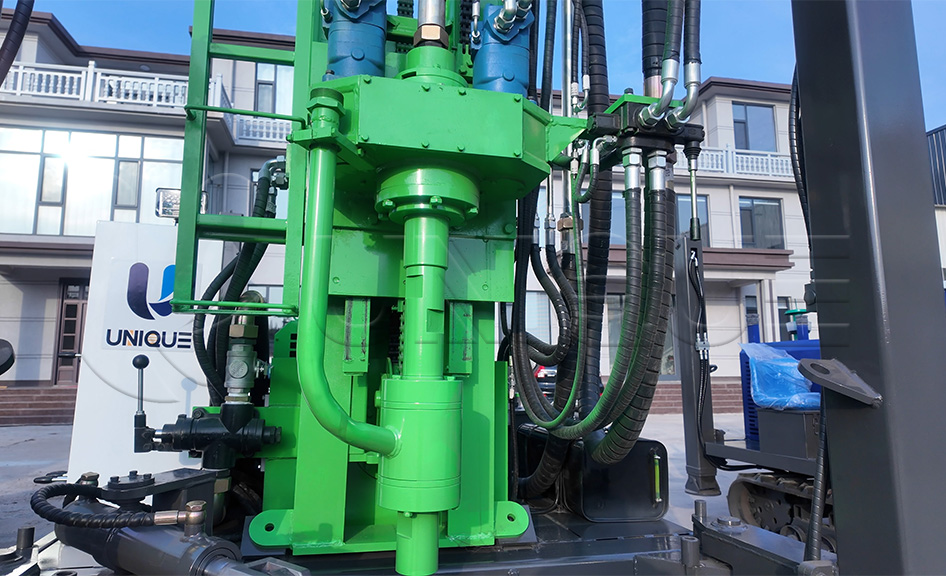
For anyone comparing rigs before making a purchase, the value of this design can be summarized in four points.
Reduced Power Head Leakage Risk.Because the drilling fluid no longer passes through the power head’s internal rotating seal, the risk of leakage caused by a failed internal water path seal is reduced.
Independent Drilling Fluid Path.The drilling fluid enters the drill pipe through an independent high-pressure water swivel, keeping the mud delivery separate from the rotation drive.
Protection of Main Transmission Components.With less drilling fluid reaching the power head’s main drive structure, the gearbox, bearings and rotating parts are better protected from mud and abrasives.
Lower Maintenance Requirements for the Power Head. Sealing failures that would normally force work on the main drive assembly are moved to a more accessible water swivel, reducing the maintenance pressure on the power head.
It is fair to say the whole rig will never be completely leak-free in every situation. The high-pressure water swivel, the pipe connections and other joints still need normal maintenance. But the design meaningfully reduces the most damaging type of leakage, which is mud leaking through the power head’s main rotating structure.
UNIQUEMAC is a professional water well drilling rig manufacturer focused on building reliable, well-designed equipment for drilling contractors around the world.
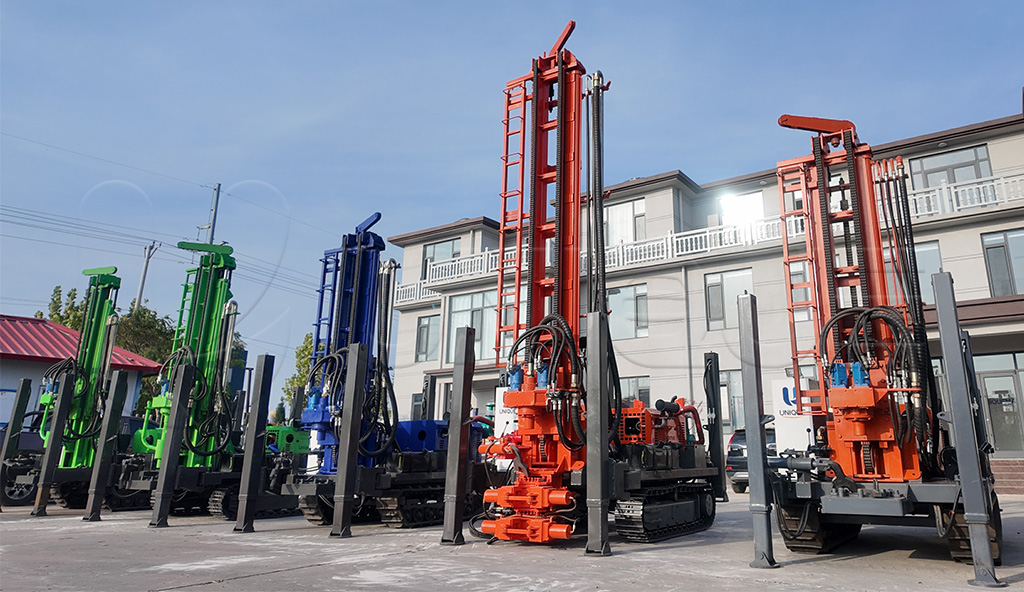
UNIQUEMAC offers water well drilling rigs for a wide range of drilling depths, from 200 meters up to 1500 meters and beyond. Whatever depth your project requires, there is a matching configuration.
The rigs can be configured with the mud pump and air compressor you need for your specific drilling method. This lets the machine match your geological conditions and your preferred way of working.
UNIQUEMAC water well drilling rigs feature a lower-mounted high-pressure water swivel design on applicable models, helping separate the drilling fluid passage from the power head’s main transmission structure and reduce the risk of power head leakage.
UNIQUEMAC also configures each rig according to the geological conditions of different countries and the specific needs of the customer, so you get a machine set up for your actual job site.
Q1: Why does a water well drilling rig power head leak water?
Common causes include a worn rotating water seal, aged sealing parts, erosion from high-pressure drilling mud, incorrect installation and long-term rotational friction. The leak appears when the rotating seal in the high-pressure fluid path can no longer hold back the mud.
Q2: Can a damaged water seal cause power head leakage?
Yes. If high-pressure drilling fluid passes through a rotating seal channel inside the power head, a damaged water seal can allow drilling fluid to leak out around the power head.
Q3: What is a water swivel on a drilling rig?
A water swivel is a device that allows drilling fluid to transfer between a stationary supply line and the rotating drill pipe. It uses a rotating seal structure to control fluid leakage at that connection point.
Q4: What is the difference between a water and air dual-purpose power head and a separate water swivel design?
The two designs mainly differ in how the fluid channel and the rotating seal structure are arranged. In one, the fluid passes through a rotating channel in the power head. In the other, the fluid goes through a separate water swivel. The right choice depends on the specific equipment structure, working pressure, flow rate and your drilling requirements.
Q5: How does UNIQUEMAC reduce water leakage from the power head?
UNIQUEMAC uses a lower-mounted high-pressure water swivel that separates the drilling fluid delivery channel from the power head’s main transmission structure. This design reduces the risk of leakage caused by failure of an internal water path seal inside the power head.
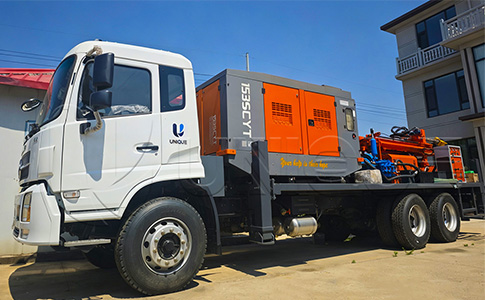
Choosing the right water well drilling rig is not only about drilling depth and drilling capacity. Contact UNIQUEMAC to learn more about our crawler and truck-mounted water well drilling rigs.
Website: https://www.uniquedrilling-tech.com
WhatsApp: +86 158 9060 9031
Email: info@sinounique.com